
How to Rank Higher on Google Maps With Local SEO
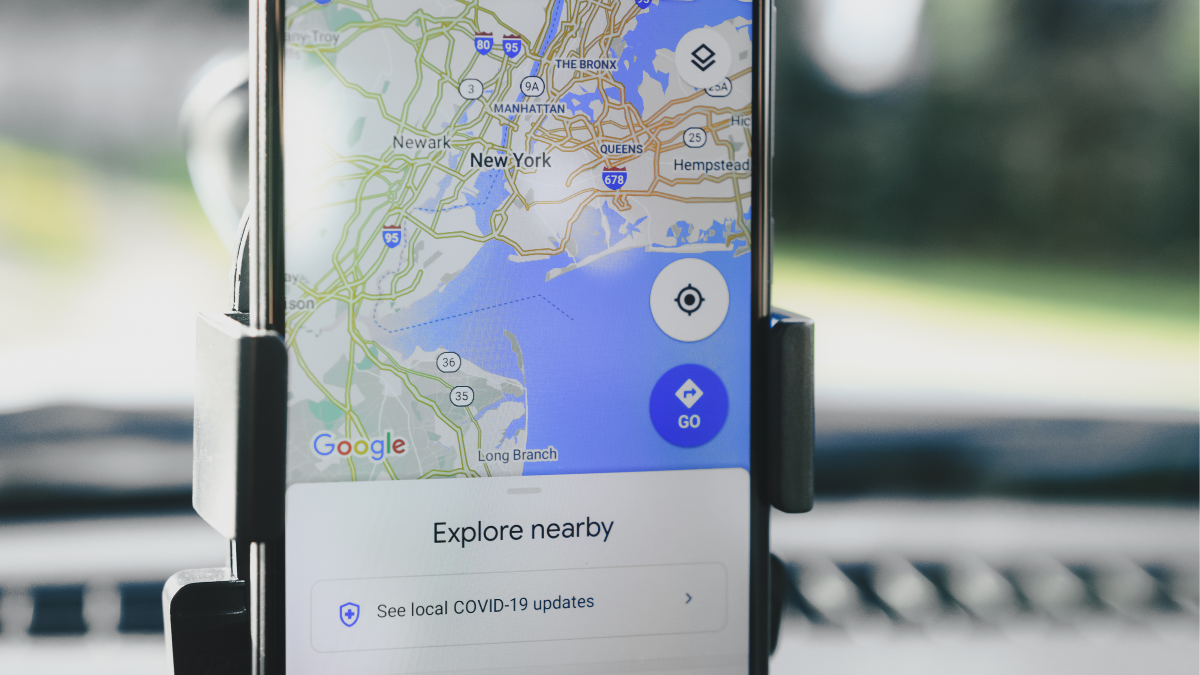
How to Rank Higher on Google Maps With Local SEO
Most people choose a business from the first three listings on Google Maps. They don’t go much further than that. So if your business does not appear in that map pack, you are missing customers out everyday. Fortunately, there is no luck or ads necessary to achieve higher ranking on Google Maps. It’s about a clear series of steps that you can take. Over the last year, the world of local SEO has undergone a significant transformation with Google increasingly favoring actual consumer signals, quality business information, and distance. This guide details what works at this time and how you can improve your business’ ranking on the maps, generate more calls, and drive more traffic to your business. No padding, no lingo, just what matters.
Google Maps Rankings are becoming increasingly important these days.
When people are looking for a local business, they now turn to Google Maps first! Anyone searching for a plumber, dentist, coffee shop, or law firm pulls out the phone and does a search. Most of the clicks and calls go to the top three results (the map pack).
Without being in those top 3, your phone will not ring. If you’re in fourth or fifth position, there’s it’ll be a massive decrease in traffic. That’s why it is one of the most crucial aspects of any local business can concentrate on is local SEO.
How Google Decides Who Ranks on Maps.
Google has identified three key points to rank businesses on Maps:
- Relevance – How close your business is to what people are looking for.
- Proximity – Your business’s location to the user who is searching.
- The more known and trusted your business is in the online space, the higher its prominence will be.
It is not possible to determine where a searcher is standing. The other two you can control, however. And that’s where local SEO comes in.
Fine Tune Your Google Business Profile Top to Bottom
Google Business Profile is the key to ranking on maps. If it’s not complete or organized, you will not get a high rank. What to think about:
- Business name – Use the name of the business. Don’t stuff keywords. Google will punish you for it.
- Categories – Select the best single category. Add secondary categories that are relevant to the primary categories.
- Address and service area – ensure that these are accurate and consistent with your site.
- Call back number – Give a local phone number and provide a local area code.
- Hours – Update them (holidays included).
- Description – Create a clearly written summary of 750 words about who you are and what you do.
- Photos – Include actual Team, Location, work and/or product photos. Update them monthly.
- Services and products – Completely complete all parts with detailed descriptions.
A full profile tells Google that you’re a legitimate, live business. It provides potential customers with all the information they need to select your business.
Build reviews that are indeed useful for ranking!
One of the most significant Google Maps ranking factors is reviews. However, it’s not all about five-star ratings. Google takes into account the amount of reviews, the freshness of reviews and the key phrases in the reviews.
So how to get a consistent flow of reviews?
- Call/ texts each customer face-to-face immediately following the service.
- Follow up email containing link to review page directly.
- Respond to all feedback, positive or negative, within 24 hours.
- Prompt customers to specify the type of service they had.
A review with ‘Great service’ is okay. But one that states “great plumbing service in Fort Lauderdale, fixed our leak the same day” is much more potent! Google uses those keywords in the reviews to determine what you do, and where.
Ensure that You Have Your NAP Everywhere!
Name, Address, and Phone number is known as NAP. Your NAP should be consistent on all sites that mention your business. That includes:
- Your own website
- Many directories such as Yelp, Bing, Apple Maps, etc.
- Industry-specific directories
- Social media profiles
- A list of nearby businesses.
- List of local chambers of commerce.
Any variation, no matter how slight, is a problem for Google. The words ‘suite’ or ‘ste’ as in Suite 200 or Ste. 200 can negatively impact your rankings. Manual or tool audit for inconsistencies and correct. One of the most underutilized aspects of local search is it does have an impact.
Create local citations and backlinks.
Citations include any reference to your business, whether or not there’s a link. Backlinks are links from other sites to your site. Both indicate confidence in your business by Google.
To establish good local government:
- List your business in the most widely used general directories, such as “Yelp” and “BBB” and “Yellow Pages”.
- Subscribe to local directories, industry-specific.
- Make a media appearance or community blog.
- Go out and find local businesses to cross-promote with.
- Host area events or charities, and request a link to your site.
It is not necessary to have hundreds of links. A few good, powerful and authoritative local ones can outperform a thousand spammy ones. This is one place where you can save time by working with a digital marketing agency that you can trust to get you quick results that you can trust.
with a digital marketing agency Fort Lauderdale that you can trust to get you quick results that you can trust.
Develop location-based content for your website.
Your website still plays a role in your Maps rankings! Google gathers information about your site to verify your company’s activities and location. To boost your local rankings:
- For each service you offer, make a separate page.
- Create dedicated pages for every city/neighborhood you serve.
- Incorporate references to local landmarks, events, etc., in your content.
- Include a Google Map of your address on your contact page.
- Create blog posts that reply neighborhood inquiries such as “best time to schedule HVAC service in South Florida.
The more your site demonstrates local knowledge, the more Google will trust you as a local business. When combined with robust Fort Lauderdale SEO, this creates a website that helps you rank better on maps than not.
Know how to use Local Keywords the Right Way
The practice of keyword stuffing has been killed. However, in the natural way of using local keywords works, too. Take the time to consider your customer’s actual search habits. They type such things as:
- “emergency plumber near me”
- This is the best Italian restaurant downtown.
- family dentist [city name]
Apply these phrases as appropriate in page titles, headings, meta descriptions and content. Do not push in those who are too big. Google’s algorithm is clever enough to detect that, and your readers will too!
Post Regularly on Your Google Business Profile
Most business owners create their Google Business Profile and “set it, and forget it.” However, Google favors an active profile. Frequent posting conveys a message that your business is alive, active and open.
These are what you can post:
- One newsletter every week regarding offers, news or events.
- New Blog Posts or articles from your site
- Photos of recent work or new products
- Overtime pay or seasonal discounts
- Customer success stories or testimonials
Just posting once a week is enough. It helps to keep your profile up to date and provides Google with additional search engine results.
Keep an eye on your rankings and make necessary changes.
Local SEO isn’t a one-off job. The ranking is updated every week according to competitor activity, reviews, Google updates and customer behaviour. To stay ahead:
- Monitor your website’s position in the rankings for your main keywords on a monthly basis.
- Observe your opponents and what they are doing differently.
- Look at your Google Business Profile insights for clicks, calls and directions.
- Adapt their plan to reflect what is and isn’t working.
It’s the businesses that continue to appear, continue to evolve, and continue to listen to their customers that are going to win on Google Maps.
Here are some common mistakes that could be harming your map rankings.
There are a couple of factors that can drag down your rankings without you knowing about them:
- Having a virtual office or PO box as your address
- Having several listings for one business.
- Buying fake reviews
- Ignoring negative reviews
- Avoid letting your profile go dormant for several months.
- A website that performs slowly or is not mobile friendly.
Exclude these and you’ll be in the lead from the off from most of your local rivals.
Final Thoughts
Improving the ranking of Google Maps is not an easy task, however, getting it done is quite straightforward. Optimize your profile, obtain real reviews, fix your NAP, create local citations, and be active. This will help your business rise in rankings over time if you do these things regularly.
Local SEO is not a trick or shortcut. It’s about providing Google and your customers with a clear understanding of what you’re about and who you’re here for! Be patient, be consistent and the results will follow.